DataSpace Academy is a leading Edtech offering career-focused courses like Cyber Security, Data Analytics, Digital Marketing, Data Science, AI with 100% Placement Assistance.
Becoming an AI Engineer requires programming knowledge, machine learning fundamentals and practical experience with artificial intelligence applications. Learn Python, explore Generative AI tools and build projects using large language models. With structured training and consistent practice, you can prepare for emerging AI career opportunities and develop the skills needed to solve real-world business problems.
Introduction
Artificial intelligence is changing how businesses build products, automate tasks and make decisions. An AI Engineer combines programming, machine learning and practical problem-solving to develop intelligent applications. This guide covers essential skills, a learning roadmap, career roadmap, generative AI tool and training pathways to help beginners plan their next step with realistic goals and hands-on projects.
What Does an AI Engineer Do?
An AI Engineer develops applications that use artificial intelligence to solve real-world problems. These professionals work with machine learning models, language models, data, and software tools to build systems that can recognise patterns, generate content, answer questions, and automate tasks. Let’s take an example, a business might use an AI-Powered chatbot to answer customer queries. An AI Engineer can connect a language model to company information, develop the applications, test its response and deploy it for users. Common responsibilities include:
Developing and testing AI-powered applications.
Preparing data for machine learning models.
Integrating AI models through APIs.
Building chatbots, recommendation systems, and intelligent assistants.
Evaluating model accuracy, reliability, and performance.
Improving applications based on user feedback.
What Skills Do You Need to Become an AI Engineer?
Well, you do not need to learn every AI concept at once. Instated, build your knowledge at stages.
Python Programming
Python is widely used in AI development. Start with variables, functions, loops, data structures, and object-oriented programming. Then practise using libraries such as NumPy and pandas to work with data.
Statistics
Learn basic probability, statistics, algebra and the mathematical ideas behind machine learning. These concepts help you understand how models identify patterns.
Machine Learning and Deep Learning
Explore supervised learning, model evaluation, neutral network and framework such as TensorFlow. These foundations help you understand how AI models learn from data.
Generative AI and Large Language Model
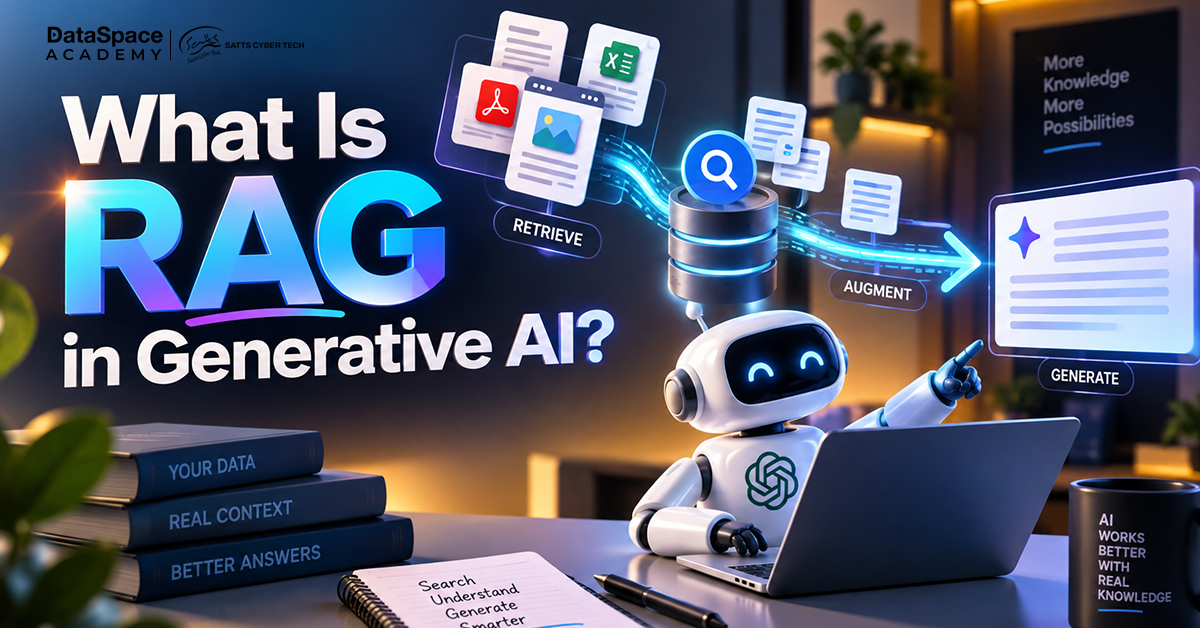
Modern AI applications often use large language models (LLMs). Learn prompt engineering, embeddings, retrieval-augmented generation (RAG) and API integration.
Software Development and Deployment
Learn Git, APIs, basic cloud computing and application deployment. These skills help you move from an experimental notebook to an application that people can actually use.
RoadMap to Become an AI Engineer?
Follow this practical roadmap to organize your learning.
Months 1-2: Learn Python and data fundamentals. Practise coding regularly and complete small exercises involving datasets.
Months 3-4: Study machine learning. Build basic classification and prediction models. Learn how to evaluate their results.
Months 5-6: Explore deep learning and Generative AI. Understand neural networks, LLMs, prompt design, and model APIs.
Months 7-8: Build practical applications. Develop a chatbot, document assistant, or recommendation tool. Add error handling and test the output.
Months 9-12: Strengthen your portfolio and job readiness. Deploy your best projects, document your code, update your resume, and practise technical interviews.
This is an illustrative timeline not a fixed guarantee. Your progress will depend on your existing skills, study hours and project complexity. However, consistent practice gives you a clearer path than jumping between unrelated tutorials.
Which AI Tools Should You Learn?
The right generative AI tools depend on the applications you want to build. Start with a manageable set and expand as your skills improve.
ChatGPT and similar LLM applications: Explore language-model capabilities and prompt design.
Hugging Face: Access models, datasets, and machine learning resources.
LangChain: Learn frameworks for building LLM-powered workflows.
Vector databases: Store and retrieve information for RAG applications.
TensorFlow: Develop a foundation in machine learning and deep learning.
GitHub and cloud platforms: Manage code and practise deployment.
Importantly do not focus on collecting tools names. Build 2-3 well documented projects that demonstrate how you solve a problem, evaluate results and improve the applications.
What is the Generative AI Engineer Salary
The Generative AI Engineer Salary depends on experience, technical skills, location, company and the complexity of work. India focused career guides commonly cite around ₹6-12 lakh per year for some entry-level AI/ML roles, although this is an indicative range rather than a guaranteed salary for every Generative AI Engineer. Experienced professionals with strong software engineering skills, LLM integration, RAG development and deployment experience may qualify for high-paying positions. However, employers access practical ability, not just course completion. To improve your prospects, focus on:
Building projects that solve clear problems.
Explaining your technical decisions confidently.
Understanding model limitations and responsible AI practices.
Practising coding assessments and technical interviews.
Keeping your skills current as tools and frameworks evolve.
How Can a Generative AI Engineering Course Help?
A structured Generative AI Engineering Course can help learners follow a planned curriculum instead of piecing together disconnected resources. Look for training that covers programming, machine learning, LLMs and deployment. Here DataSpace Academy offers learning pathways in Generative AI and related technical fields. A project-focused learning approach can help learners connect concepts with practical applications and build a portfolio over time.
Career Opportunities After Learning AI Engineering
As organizations explore automation and AI-Powered products, Learners may pursue different generative AI career depending on their skills and experience. Potential roles include:
AI Engineer
Generative AI Engineer
Machine Learning Engineer
AI Application Developer
NLP Engineer
Junior AI/ML Engineer
Some positions require strong software development experience, while others focus on machine learning, language models or data processing. Therefore read the job description carefully and build the skills required for your career goals. Here, DataSpace Academy can be a starting point for learners exploring structured training in Generative AI and related technical disciplines.
Conclusion
Becoming an AI Engineer takes time, practical learning and clear understanding of how AI systems work. Start with Python, strengthen your machine learning fundamentals, explore generative AI tools and build projects that demonstrate your ability. As you progress, focus on deployment, problem solving and responsible AI development. Ready to start your AI Learning Journey? Explore DataSpace Academy to learn more about its AI and technical programs.
FAQs
Can I become an AI Engineer without a computer science degree?
Yes, it is possible. However, you need to develop programming, mathematics, machine learning, and software development skills. A strong portfolio can help demonstrate your practical abilities to employers.
How long does it take to become an AI Engineer?
A learner with consistent study habits may need around 6-12 months to develop foundational skills and build initial projects. Becoming job-ready can take longer, depending on prior experience and the roles you target.
Which programming language is best for AI engineering?
Python is a strong starting point because it supports widely used machine learning libraries and AI development frameworks. SQL is also useful for working with structured data.
Is an AI Engineering Course useful for beginners?
Yes, provided it teaches the fundamentals before moving to advanced topics. Look for Python, machine learning, LLMs, hands-on projects, and application deployment rather than tool demonstrations alone.
What projects should aspiring AI Engineers build?
Start with two or three projects, such as a document-question-answering chatbot, an AI-powered customer support assistant, or a recommendation system. Explain the problem, tools, testing process, limitations, and results for each project.