DataSpace Academy is a leading Edtech offering career-focused courses like Cyber Security, Data Analytics, Digital Marketing, Data Science, AI with 100% Placement Assistance.
A Generative AI Engineer builds intelligent applications using Python, machine learning, large language model and AI framework. Learn the essential Generative AI skills, follow a practical roadmap and explore how this growing field can shape your Artificial Intelligence career.
Introduction
Generative AI has quickly moved from an emerging technology to a practical business tool. Companies now use AI to create content, automate workflows and build intelligent applications. As a result, professionals who can develop and deploy these solutions have gained strong career options. If you enjoy programming, problem-solving and emerging technologies, becoming a Generative AI Engineer offers an exciting career path. However, you need more than basic knowledge of ChatGPT or other AI tools. You must understand programming, machine learning, LLMs, APIs, prompt engineering and deployment. For learners who want structured practical training, an IT institute in Kolkata like DataSpace Academy offers a career focused Generative AI Course: Python to Production AI, covering the journey from Python fundamentals to production-ready AI applications.
What Does Generative AI Engineer Do?
A Generative AI Engineer develops applications that can create or process new content using artificial intelligence. Their work can involve text, images, code and other forms of data. Typical responsibilities include:
Developing AI-powered applications
Working with large language models
Building and testing prompts
Creating AI chatbots and assistants
Connecting AI models with business applications
Working with APIs and AI frameworks
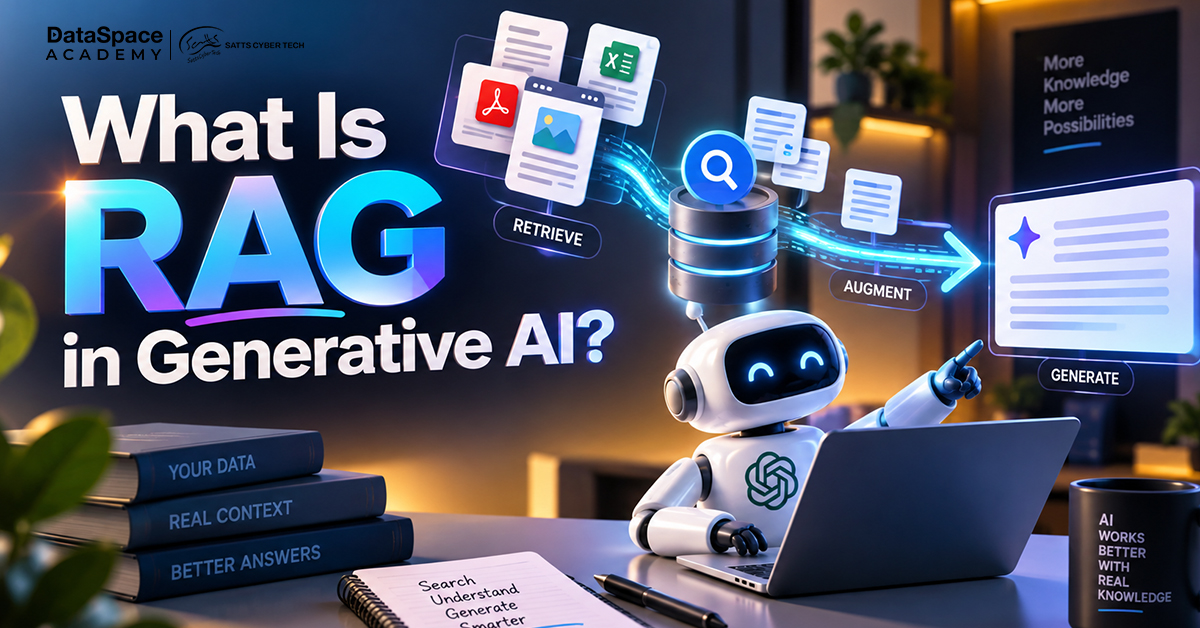
Building retrieval-augmented generation applications
Managing and evaluating AI outputs
Deploying AI applications into production
Improving model performance and reliability
For instance, an e-commerce company may use a Generative AI application to answer customer questions and generate personalized responses.
How to Become a Generative AI Engineer?
You do not need to master everything at once, Instead follow a structured learning path and build your knowledge step by step.
Learn Python Programming:
Python provides a strong foundation for modern AI development. You need to start with:
Variables and data types
Functions
Loops and conditions
Object-oriented programming
File handling
APIs
Libraries and packages
Next, practice python with small projects. This approach will help you understand how developers use code to solve real problems.
Understand Data and Machine Learning
Generative AI builds on several concepts from machine learning. Therefore, learn the fundamentals before moving into advanced AI applications. Focus on:
Data preprocessing
Statistics basics
Supervised and unsupervised learning
Model evaluation
Feature engineering
Neural networks
Deep learning fundamentals
You do not need to become a research scientist. However, understanding how models learn will help you make better engineering decisions.
Learn Large Language Model
Large language models form an important part of modern Generative AI applications. Learn concepts such as:
Tokens and embeddings
Transformers
Context windows
Model parameters
Fine-tuning
Inference
Model evaluation
LLM APIs
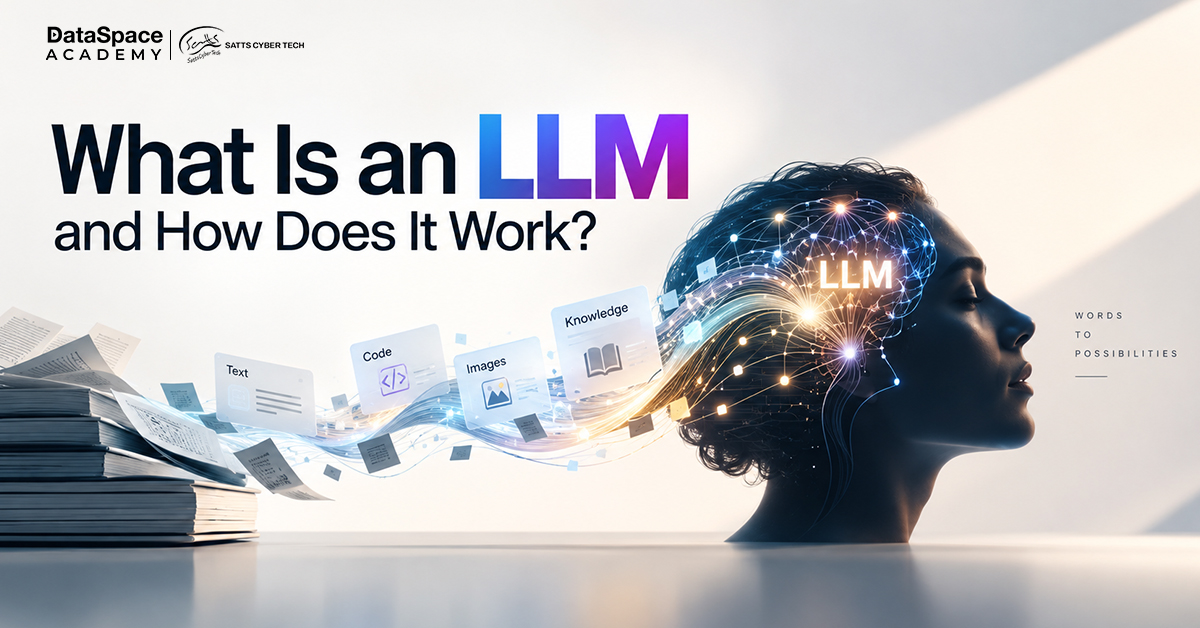
Once you understand these, you can move from simply using AI tools to building applications around them.
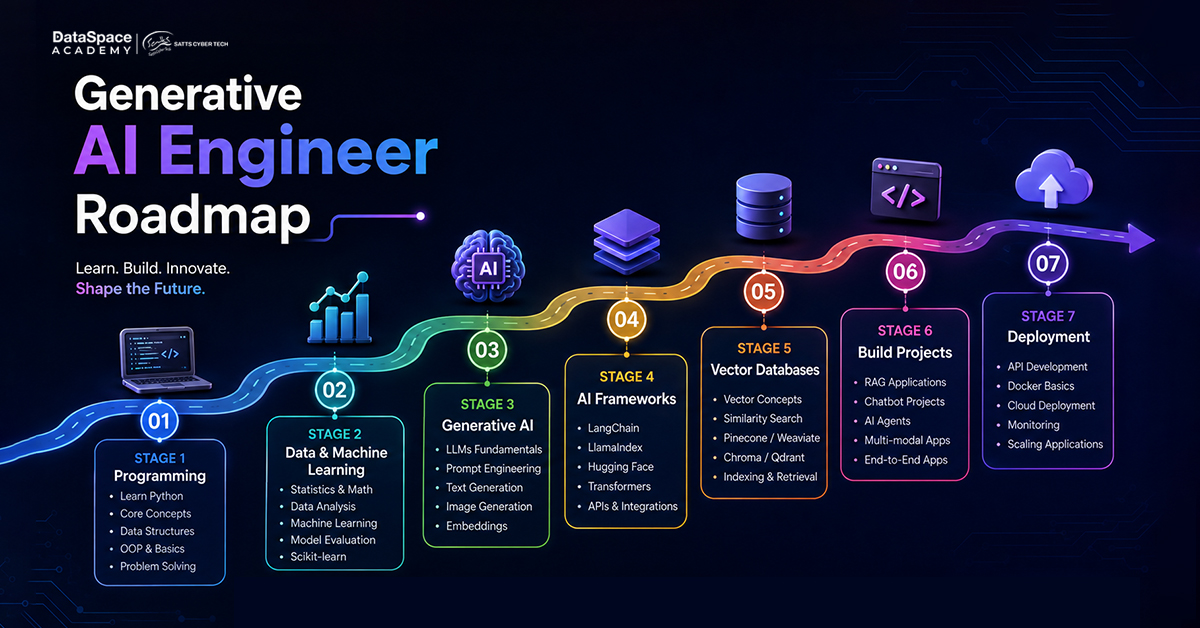
Generative AI Engineer Roadmap
The Generative AI Engineer Roadmap is presented below.
Stage 1: Programming
Build a strong foundation in Python and problem-solving.
Stage 2: Data & Machine Learning
Learn data handling, machine learning and deep learning fundamentals.
Stage 3: Generative AI
Understand LLMs, embeddings, transformers and prompt engineering.
Stage 4: AI Frameworks
Explore tools and frameworks such as LangChain, LlamaIndex and Hugging Face.
Stage 5: Vector Databases
Learn how vector databases store and retrieve information for AI applications.
Stage 6: Build Projects
Create chatbots, document assistants, recommendation systems and RAG applications.
Stage 7: Deployment
Learn APIs, cloud platforms, application deployment and monitoring.These steps can help you build practical Generative AI Skills instead of relying on theoretical knowledge.
Essential Generative AI Skills to Develop
Employers look for professionals who can combine technical knowledge with practical problem solving. Important skills include:
Python programming
Machine learning
Deep learning
Prompt engineering
LLM application development
Natural language processing
RAG implementation
Vector databases
API integration
Cloud fundamentals
Model evaluation
AI application deployment
Communication and problem-solving
Additionally, keep experimenting with new AI frameworks. The technology changes quickly, so continuous learning plays an important role in long-term career growth.
Career Opportunities in Generative AI
Generative AI creates opportunities across technology, finance and healthcare. After developing the right skills, you can explore roles such as:
Generative AI Engineer
AI Engineer
Machine Learning Engineer
LLM Application Developer
Prompt Engineer
AI Solutions Developer
NLP Engineer
AI Consultant
AI Automation Specialist
Entry-level professionals can begin with application development and gradually move toward AI architectural roles. Moreover, businesses increasingly need professionals who can connect AI capabilities with real business requirements. This combination of technology and business understanding can strengthen your Artificial Intelligence Career.
Why Practical Learning Matters?
Generative AI evolves rapidly. Therefore, professionals need practical exposure rather than only theoretical knowledge. A strong learning program should provide:
Hands-on projects
Industry-relevant tools
Mentor guidance
Portfolio development
Real-world case studies
AI application development
Interview preparation
Deployment experience
In this respect, it is important to enroll in Generative AI Course Kolkata and gain more career opportunities.DataSpace Academy focuses on practical, career-oriented learning through Generative AI Course: Python to Production AI, helping learners connect programming fundamentals with modern AI application development.
Conclusion
Becoming a Generative AI Engineer requires patience and consistent practice and a clear learning strategy. Start with Python, strengthen your machine learning foundation, understand LLMS and gradually learn frameworks and deployment. Most importantly build projects throughout your learning journey. Your portfolio can show employers how effectively you apply your Generative AI skills to real problems. If you follow a structured Generative AI Engineer roadmap, keep learning and gain practical experience, you can create strong opportunities for your Artificial Intelligence career.So, build skills by enrolling in Generative AI Course Kolkata that will help you to lead in this competitive market place.
FAQs
What does a Generative AI Engineer do?
A Generative AI Engineer builds, integrates and deploys AI applications that generate or process content.
Can beginners become Generative AI Engineers?
Yes, beginners can start with Python and gradually learn machine learning, LLMs and AI application development.
Which programming language should I learn for Generative AI?
Python remains one of the most useful programming languages for Generative AI development.
What are the most important Generative AI skills?
Python, machine learning, LLMs, prompt engineering, RAG, APIs, vector databases and deployment skills can provide a strong foundation.
How can I start my Generative AI Engineer roadmap?
Start with Python, learn machine learning fundamentals, explore LLMs, build projects and gradually learn AI frameworks and deployment.