DataSpace Academy is a leading Edtech offering career-focused courses like Cyber Security, Data Analytics, Digital Marketing, Data Science, AI with 100% Placement Assistance.
Artificial intelligence is moving towards systems that can understand goals, plan tasks and use digital tools. Muse AI represents this shift by supporting productivity, research and everyday planning. Its agentic capabilities allow it to work in the background while maintaining user controls and approval for sensitive actions. Understanding Muse AI can help learners prepare for the evolving AI-powered workplace and emerging opportunities.
Introduction
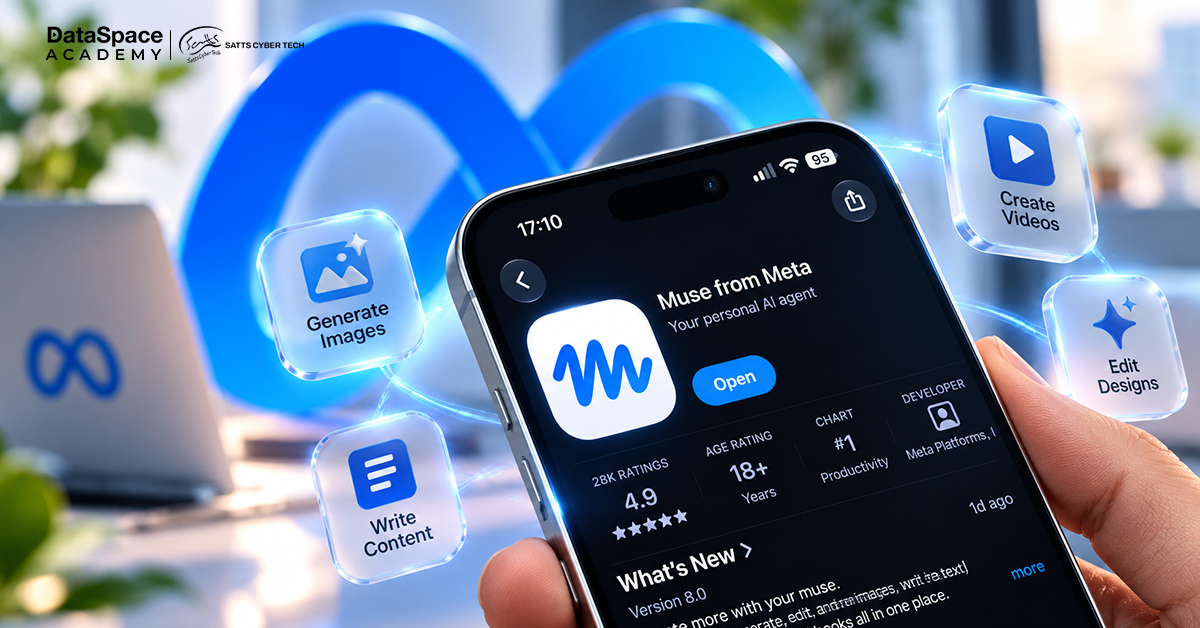
Artificial intelligence is moving beyond chatbots that simply answer questions. Today, AI agents can understand goals, plan tasks, use digital tools and take action with limited step-by-step guidance. Muse AI represents the shift by combining conversational AI with agentic capabilities that help users complete everyday tasks and work towards long-term goals. Meta introduced Muse in September 2026 as a personal AI agent designed to work on a user's behalf. Instead of only providing the information, Muse can create action plans, browse the web, use connected apps and continue working in the background.
What Is Muse AI?
Muse is a personal AI agent developed by Meta. It uses an agentic approach, which means it can move from understanding a request to planning and executing multiple tasks. Muse can research options, work through websites and complete parts of the process while asking for approval when an important action requires user confirmation. Some key capabilities include:
Understanding personal goals
Creating action plans
Browsing the web
Completing multi-step tasks
Working with connected applications
Generating documents and images
Tracking goals and reminders
Continuing tasks in the background
Therefore Meta moves AI from simple conversation toward practical task execution.
How Does Muse AI Work?
Muse uses Muse Spark which is a Meta’s model designed for agentic work. It operates through a dedicated environment called Muse Secure VM. This environment gives Muse its own computer and browser. It can use that environment to navigate websites, fill forms and work with connected services. At the same time meta has built controls around credentials and activity training. The process is suggested below:
You provide a goal - Tell Muse what you want to accomplish.
Muse creates a plan - It breaks the goal into manageable actions.
Muse completes tasks - It uses its browser, tools, and connected apps.
You remain in control - Muse requests approval for sensitive actions.
The approach makes AI more useful for tasks that involve connected steps.
Uses of Muse AI
Muse can support both personal and professional activities.
Personal Productivity
Muse can help manage calendars, reminders, email and travel planning and everyday tasks. For example, you could ask it to organise your schedule around an upcoming trip. Muse can help coordinate information and prepare the necessary steps.
Research and Planning
Muse can research information across the web and turn your findings into useful plans. It can also monitor information and return with updates when something changes.
Content and Creative Work
Muse can generate images, documents and ideas. It can work with creative applications through supported connections.
Business Support
Muse has also expanded into-small business workflow. Meta says businesses can connect tools such as Shopify, Canva, QuickBooks, Slack, Stripe, Instagram professional accounts and Facebook Pages. For professionals interested in building AI capabilities, understanding an agentic system can complement skills covered in Generative AI Course in Kolkata.
Benefits of Muse AI
Muse can provide several practical benefits.
Saves Time
Muse can handle repetitive digital tasks and reduce the amount of manual work users need to complete.
Supports Long-Term Goals
Unlike a basic chatbot, Muse can continue working toward a goal after the initial conversation. It can track progress and return with suggestions or updates.
Connects Multiple Tools
Muse can work with connected applications instead of operating as an isolated chatbot. This makes it more useful for workflows that involve several platforms.
Improves Personalisation
Muse can remember information that matters to a user and use that context to provide more relevant suggestions.
Keeps Users in Control
Meta says Muse asks for permission before sensitive actions such as sending emails or making purchases. Users can also manage connected services and permissions.
Muse AI and the Future of AI Skills
The rise of personal AI agents shows why professionals need skills beyond basic AI tools usage. Businesses need people who understand prompting, automation, AI workflow and agentic systems. If you want to explore the wider skill landscape, read 10 AI Skills That Will Make You Rich in 2026 for a broader look at the capabilities employers may value. Well, a Generative AI Institute in Kolkata, DataSpace Academy can help learners build foundations in areas such as prompt engineering, AI applications, automation and Generative AI workflow. Moreover, an IT Training Institute in Kolkata can provide broader technical exposure for learners who want to understand how AI connects with software, data and digital systems.
Why Should Students and Professionals Learn About Muse AI?
Muse highlights an important change in the AI industry. Users are moving from asking AI for answers to asking AI to complete tasks. A Generative AI Training Institute in Kolkata can help learners develop practical knowledge of modern AI tools and workflows. Similarly, an IT Training Institute in Kolkata can help students build the technical foundation needed to work with AI-powered applications.
Conclusion
AI is becoming more action-oriented and Muse AI demonstrates how personal agents can plan, execute and monitor tasks instead of generating response. Its ability to connect with applications, work in the background and support personal goals. Well, Building practical skills through a Generative AI Course in Kolkata by enrolling in DataSpace Academy can be a useful step toward understanding this next generation of AI applications.
So, learn AI skills today and build the agentic future with DataSpace Academy.
FAQs
What is Muse AI?
Muse is Meta's personal AI agent that can plan and complete multi-step tasks on a user's behalf.
What can Muse AI do?
Muse can browse the web, manage tasks, connect with apps, create content, track goals, and perform approved actions.
Is Muse AI different from a chatbot?
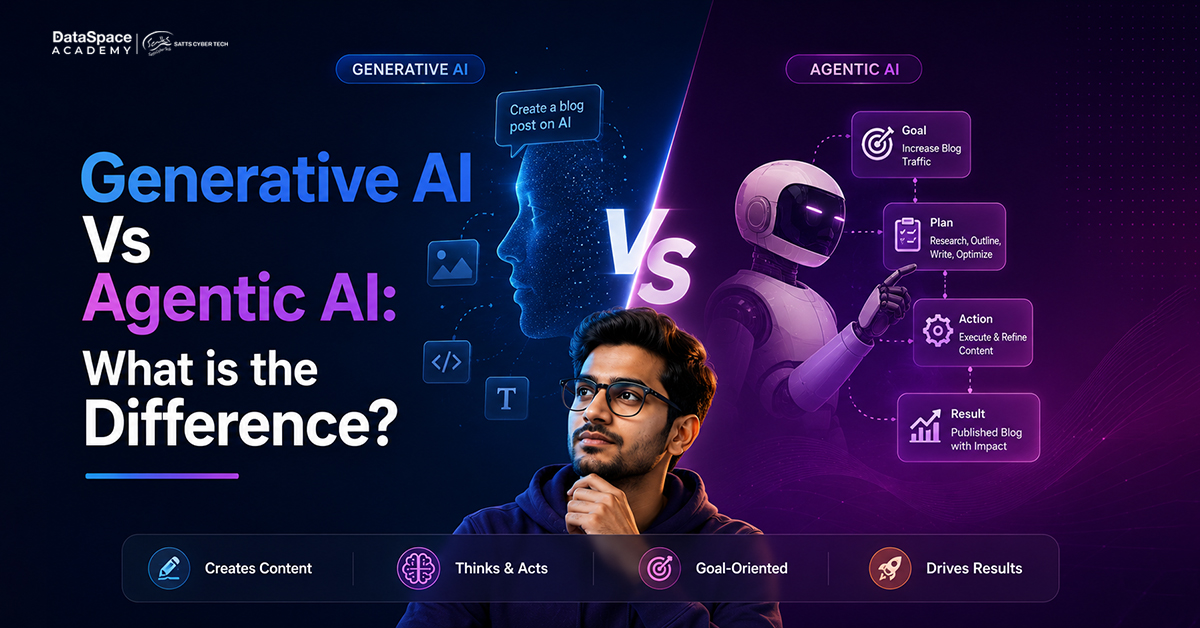
Yes, Muse can take actions and complete multi-step workflows instead of only responding to questions.
Does Muse AI work in the background?
Yes, Muse can continue working on assigned tasks after the user closes the app.
Who can benefit from learning about AI agents?
Students, professionals, marketers, developers, business owners and anyone working with AI-powered workflows can benefit from understanding agentic AI.