In 2026, data analytics is no longer just a part of business operations; it has become the accelerator. Today, strategic decision-making, innovation, and automation are redefining the role of data analysts and data analytics skills for 2026.
According to recent
projections, the global data mine is expected to exceed 221 zettabytes by 2026, a colossal volume that underscores both the challenge and opportunity for businesses. As we look forward to 2026, the gap between those who simply process data and those who extract decisive intelligence is making the difference. This blog serves as your strategic roadmap, featuring the essential skills required for data analyst in 2026 that will distinguish the leaders from the laggards. Let's get started.
The data economy is exploding, directly impacting and reinventing today's modern analytics roles. Some of the major components redefining today's in-demand analytics roles are advanced visualisation, AI integration, and strategic thinking. Messy spreadsheets are now a thing of the past, while the art of automating workflows with AI is driving decisive intelligence and communicating results effectively. The art of automating spreadsheets is among one of the key data analyst technical skills- a driving factor in the hiring process.
The rapid adoption of AI has significantly transformed the core skill sets for data analysts in 2026- now broader and deeper than ever. Today, the role of data analysts spans from proficiency with technical toolkit to soft skills like storytelling and understanding of businesses.
The role of the data analysts is not just evolving; it is undergoing a fundamental metamorphosis with AI becoming the major catalyst. The current hiring trends will prioritize data analysts who are capable of augmenting human intelligence with artificial intelligence. Let’s have a look at the core data analytics skills credit to your resume:
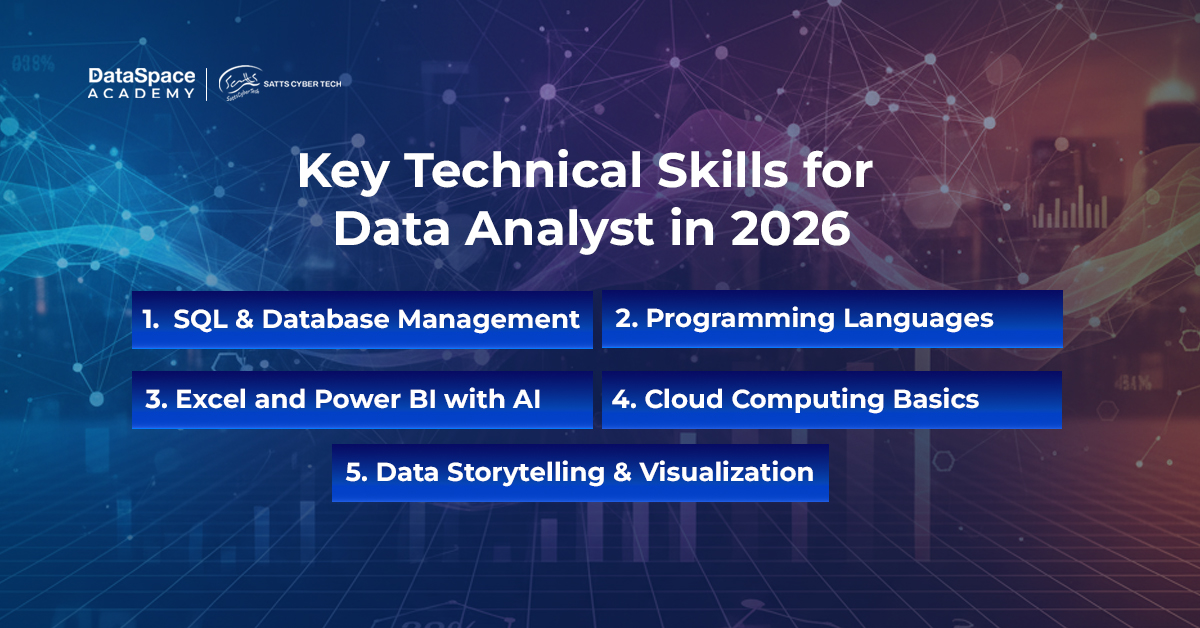
Here is a deep dive into each skill:
Even in 2026, SQL expertise tops the list of required skill sets for data analysts. SQL skillset continues to be the dominant factor, appearing in up to 80% of the job descriptions for data analysts. SQL mastery and certification validates your foundational skill in extracting and manipulating data with confidence.
Despite the rise of low-code tools, the flexibility and power of programming languages are irreplaceable. The versatile Python will continue to dominate, credit: its rich ecosystem (Pandas, NumPy, Scikit-learn, PyTorch/TensorFlow for ML). 2026 is not just demanding scripting for analysis, but the skill to efficiently write production-ready code for data pipelines, automation, and deploying simple machine learning models.
R seconds the list for deep statistical analysis and specialised fields like bioinformatics.
Excel and Power BI are evolving into intelligent analytics platforms. AI now handles the heavy lifting of analytics- suggesting insights, writing formulas, and building visuals. Analysts who understand data deeply and know how to use
AI in Excel and Power BI
will lead the next wave of faster and more intuitive decision-making.
Remember waiting hours for a report to run or battling with inaccessible data? The cloud is changing that game for analysts. Now, with companies all-in on platforms like AWS Redshift, Google BigQuery, and Azure Synapse, your skill set needs to align with the shift. Getting fluent in this
environment
is a major differentiator for a modern data analyst to work with streaming data, and handle massive scale without a sweat.
Data Storytelling & Visualization:
A visually-appealing dashboard is useless if it doesn’t drive action. This implies the need for mastery in narrative for today's data analyst, which involves choosing the right visualisation for the message, designing intuitive dashboards with tools like Tableau or the advanced Power BI, and crafting a compelling story that guides the stakeholder with a data-backed recommendation.
Besides the above-mentioned list of core technical skills, the human edge factor is non-negotiable for modern data analytics roles, such as:
Your journey to a rewarding professional outcome begins with the following steps:
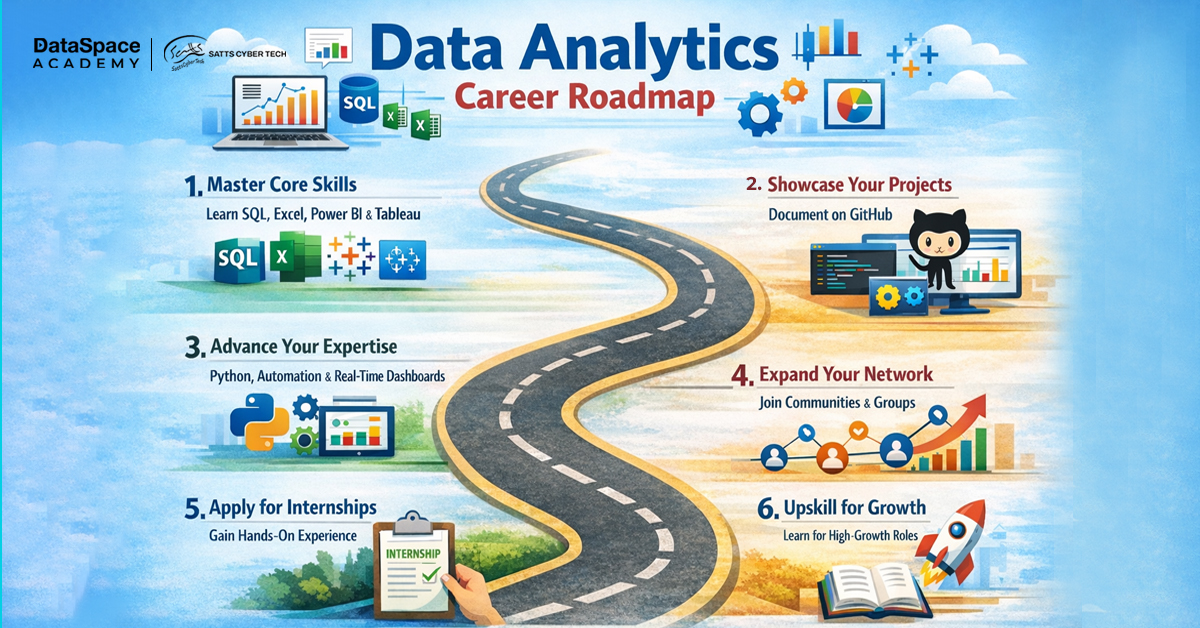
Becoming an in-demand data analyst in 2026 requires more than just technical proficiency, it demands a strategic combination of technical strength, curiosity, communication, and business acumen.
If you invest time in mastering
data analytics skills for 2026
, and modern analytics tools while sharpening your analytical mindset and storytelling skills, you will not just survive, but thrive in the competitive analytics job market.
The core skills include SQL, advanced Excel, Power BI (with AI capabilities), programming basics (Python/R), statistics, and strong communication.
Absolutely, Excel remains a high-value skill used in 70%+ of analyst roles for cleanups, pivots, and reporting.
Yes, while not mandatory at entry-level, understanding AI tools and how to integrate them into workflows boosts both efficiency and competitiveness.
Key tools include SQL, Excel, Power BI, Tableau, Python libraries, cloud platforms, and AI assistants.
Start with foundational technical skills, build practical projects, learn BI visualization, and develop business and communication abilities that turn insights into actions.


 Loading...