Choosing a career today isn’t as straightforward as it used to be. There are new roles, new technologies, and endless opinions coming from every direction. Somewhere in the middle of all this, data science often catches attention, sometimes through a class, a YouTube video, or a simple job search. It sounds interesting, but also a little confusing. That curiosity usually turns into a simple question:
how to become a data scientist as a beginner, without feeling out of place or underprepared.
This blog takes a calm, practical look at that journey, what the role actually involves, what you need to learn, and how beginners can move forward at their own pace.
At its core, a data scientist turns raw data into meaningful insights that drive business decisions. But the role is much more than just working with numbers.
A data scientist typically:
As per the evolving
data scientist career roadmap 2026, the role is becoming more interdisciplinary. Data scientists are now expected to blend technical expertise with business understanding and communication skills. This evolution is important for anyone planning a
data scientist career path for beginners, as it emphasises adaptability over rote learning.
Understanding the
skills required to become a data scientist is crucial before starting your learning journey. These skills can be divided into four main categories.
You don’t need to be a math genius, but a strong foundation is essential. Key areas include:
These concepts help in model building and interpreting data correctly.
Programming is non-negotiable in the modern
data scientist career roadmap 2026.
Beginners should focus on writing clean, readable code rather than memorizing syntax.
This is where theory meets practice:
These are core
skills required to become a data scientist, especially for entry-level roles.
One often-overlooked aspect of the
data scientist career path for beginners is storytelling. Employers value professionals who can explain insights clearly to non-technical stakeholders.
Alongside skills, mastering the right tools makes your journey smoother. Some commonly
tools used by data scientists include:
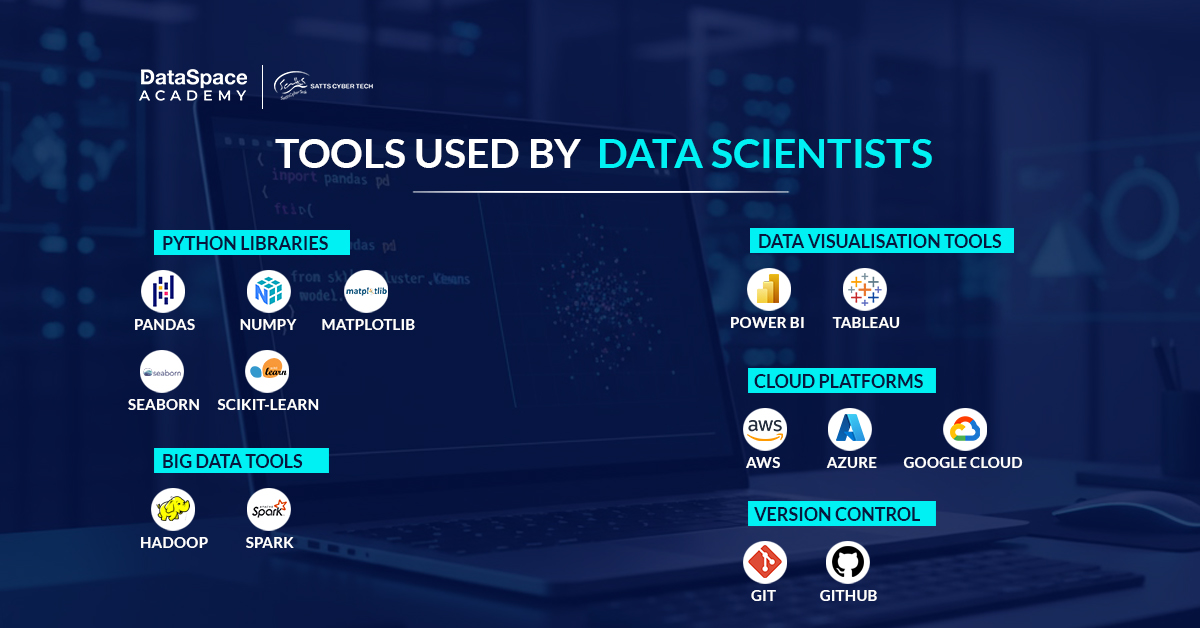
For beginners learning
how to become a data scientist as a beginner, it’s better to gain depth in fewer tools rather than shallow knowledge of many.
A clear
data scientist career path for beginners helps reduce confusion and burnout.
Start with statistics, Python, and SQL. Focus on understanding concepts rather than rushing through topics.
Hands-on projects are critical. Analyse real datasets, solve business problems, and document your approach.
A strong portfolio often matters more than certifications. It showcases your understanding of the
tools used by data scientists and real-world applications.
Step 4: Entry-Level Roles
Beginners often start as:
These roles align well with the
data scientist career roadmap 2026 and offer strong learning exposure.
Data science evolves fast. Continuous learning is essential to stay at par with the industry standards.
In India, data science freshers can expect an average salary ranging from:
Globally, salaries vary based on region, industry, and specialisation, but data science consistently ranks among the top-paying tech roles. This earning potential further motivates beginners exploring
how to start a career in data science
Data science is not a sprint. It’s a journey, and 2026 is a great time to begin. Learning through a proper
roadmap to become a data scientist is less about shortcuts and more about structured growth. The
data scientist career roadmap 2026 favours individuals who build strong fundamentals, practice consistently, and stay curious.
By understanding the
skills required to become a data scientist, gaining hands-on experience with the
tools used by data scientists, and following a realistic
data scientist career path for beginners, you can confidently transition into this field.
For learners who are seeking guided learning, mentorship, and industry-aligned exposure, structured learning ecosystems can help bridge the gap between theory and real-world expectations. Platforms that focus on practical learning, real datasets, and career mentoring, such as
Dataspace Academy Data Science Course, often play a supportive role in shaping job-ready professionals without replacing the need for self-effort and consistency.


 Loading...