There was a time when marketing depended on impressions and traffic numbers. However, nowadays, companies are focusing on sustainable customer relationships. To understand how marketing is performing, it is essential to understand the customer’s behaviour. This shift has made
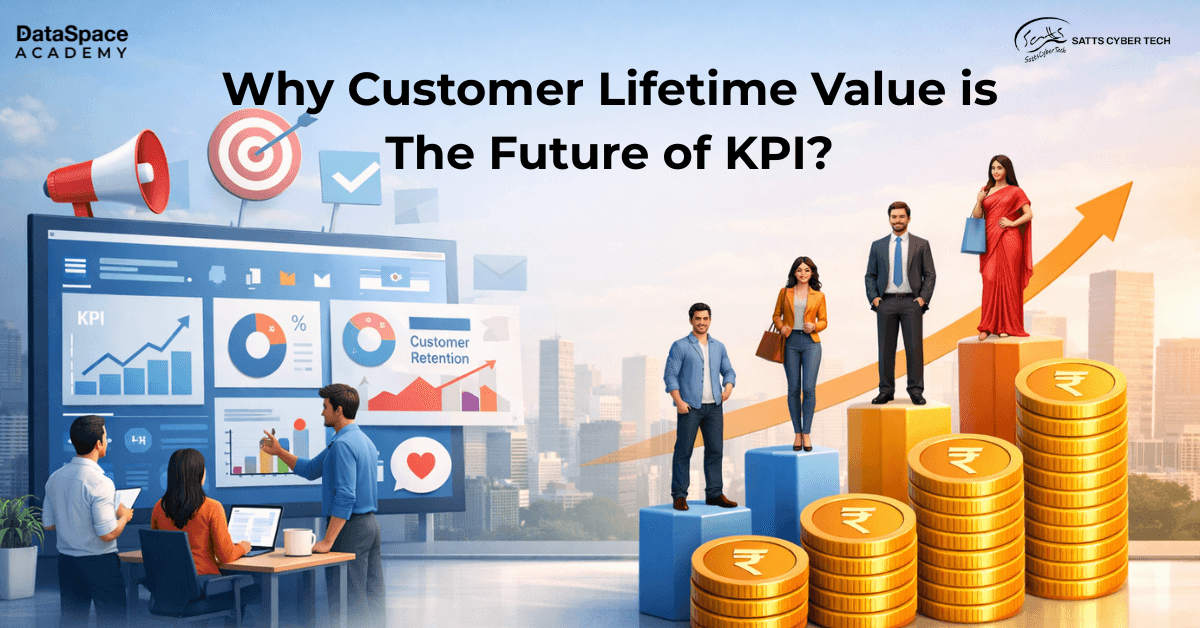
Customer Lifetime Value (CLV) an important performance indicator in modern marketing strategies. It helps businesses focus on customers who bring long-term value.
Marketing leaders believe that loyalty drives stronger revenue. Studies show that an increase in customer retention by 5% can increase profits by nearly
25% to 95%. Clear communication and loyalty programs strengthen customer relationships. In this blog, let us understand what Customer Lifetime Value is and why it is becoming the future KPI in modern marketing.
Customer Lifetime Value (CLV) measures the total revenue a business can expect from a customer during the entire relationship. This metric helps businesses understand the real financial impact of acquiring and retaining customers.
For instance, if a customer purchases products worth
₹5,000 every year for five years, the lifetime value becomes
₹25,000. This insight helps marketers decide how much they should invest in customer acquisition campaigns.
Companies track this metric to improve long-term profitability and marketing efficiency.
Essential factors influencing Customer Lifetime Value include:
When businesses understand these factors, they can design stronger marketing strategies that focus on loyalty and repeat engagement.
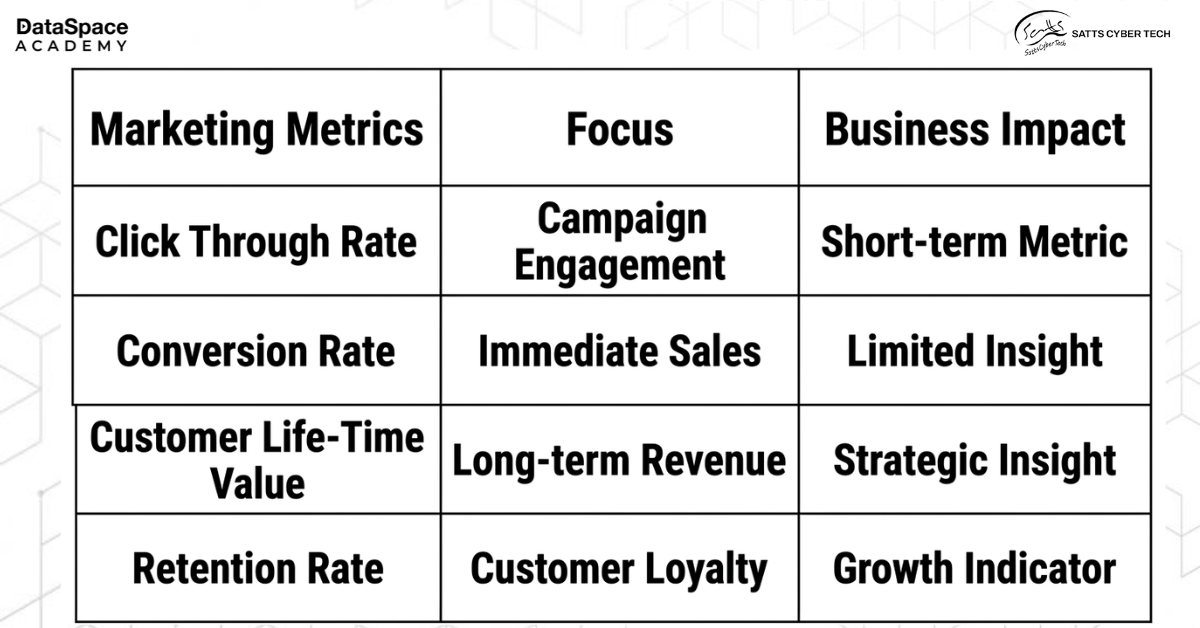
Traditional marketing KPIs usually focus on campaign performance metrics such as impressions, conversion rate, and clicks. However, these metrics do not always measure long-term business success.
Customer Lifetime Value focuses on sustainable revenue generation. Companies can analyse which marketing channels bring high-value customers rather than short-term traffic.
For example, two campaigns may generate the same number of conversions. However, one campaign may attract loyal customers who purchase repeatedly. That campaign becomes more valuable for business growth. This shift encourages companies to evaluate their marketing performance through long-term revenue impact.
Important benefits of using CLV as a KPI include:
Research shows that returning customers spend nearly
67% more than new customers.
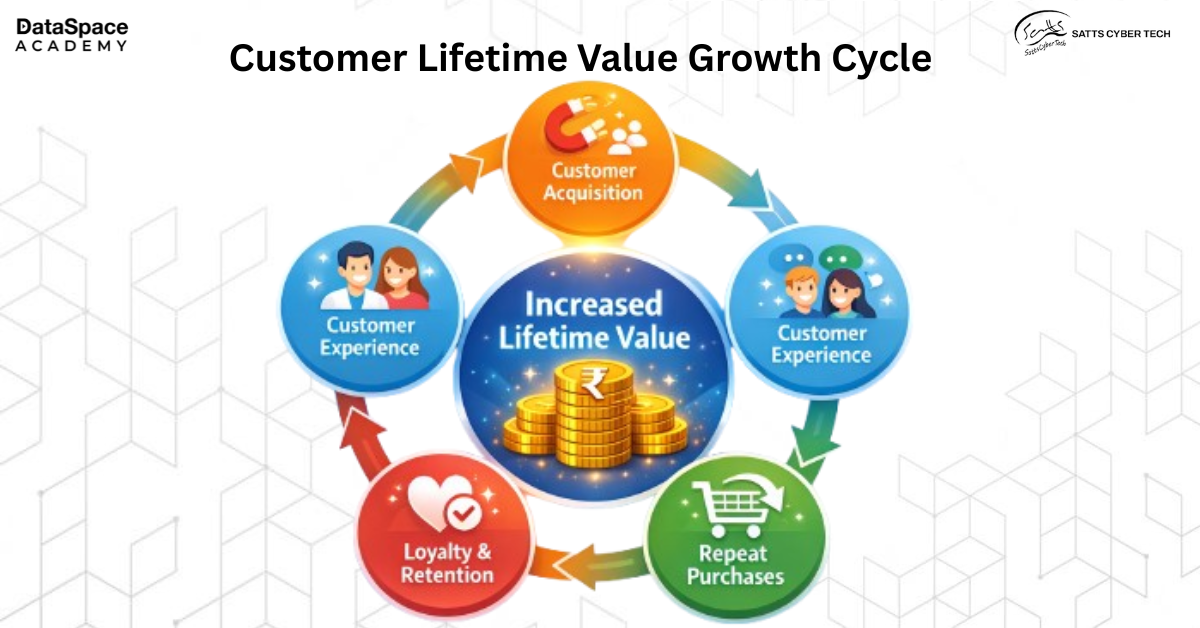
Several factors influence Customer Lifetime Value. Some of the key factors include:
Understanding these attributes helps marketing professionals gain deeper insights into customer behaviour. Many learners explore a
digital marketing institute in Kolkata to build expertise in such modern marketing metrics and develop a strong career in the industry.
Companies now combine lifetime value data with marketing performance metrics to create smarter strategies. Marketers can identify profitable audience segments and personalise campaigns accordingly.
For example, ecommerce brands analyse lifetime value data to identify repeat buyers. They then create loyalty programs, exclusive discounts, and personalised recommendations to retain these customers.
This strategy improves customer satisfaction and supports long-term business growth. Marketing teams also allocate budgets more effectively by focusing not only on acquisition but also on retention strategies.
Some important retention strategies include:
Professionals who learn these strategies through a
Digital Marketing Course in Kolkata with Placement gain practical knowledge about modern marketing frameworks. Institutions like
DataSpace Academy help students understand how advanced metrics influence business growth.
Marketing teams rely on analytical and performance data to make informed decisions. The table below compares traditional marketing KPIs with lifetime value-focused metrics.
Companies that focus on lifetime value often achieve stronger long-term growth. Retained customers are more likely to recommend brands and generate referrals. Students studying marketing analytics at a
digital marketing institute in Kolkata frequently learn lifetime value models to understand modern marketing measurement systems.
There is a simple formula used to calculate Customer Lifetime Value:
Customer Lifetime Value = Average Purchase Value × Purchase Frequency × Customer Lifespan
Example:
Customer Lifetime Value = ₹30,000
This calculation helps businesses understand the real economic value of each customer.
As businesses are becoming more data-driven, professionals must understand CLV strategies. Many learners explore training programs such as a
Job Guarantee Digital Marketing Programme to understand automation tools, analytics platforms, and modern marketing metrics.
Programs offered by
DataSpace Academy, a well-known digital marketing institute in Kolkata, focus on practical learning approaches. These programs help students understand customer behaviour, retention strategies, and lifetime value models used in real-world marketing.
Modern marketing no longer depends only on clicks, impressions, or short-term sales results. Businesses now prioritise customer relationships and long-term loyalty. This shift makes
Customer Lifetime Value one of the most powerful performance indicators in modern marketing.
CLV helps companies focus on customer retention, loyalty, and sustainable revenue growth. Professionals who understand lifetime value analytics can develop stronger marketing strategies and drive long-term business success.
Learning these skills through a
Job Guarantee Digital Marketing Programme can help aspiring marketers build successful careers in the evolving digital marketing industry.
Start learning modern marketing analytics and build high-impact marketing strategies with DataSpace Academy.
Customer Lifetime Value measures the total revenue a business expects to earn from a customer throughout the entire relationship.
It helps companies understand long-term customer profitability and make better marketing investment decisions.
Businesses increase CLV through loyalty programs, personalised marketing, improved customer experiences, and retention strategies.
Ecommerce, SaaS, finance, and subscription-based businesses frequently use this metric.
Yes. Even small businesses can estimate lifetime value by analysing repeat purchases and customer retention patterns.


 Loading...