Search engine optimization (SEO) has changed significantly in the last few years. There was a time when SEO was mainly used to rank websites on Google, but today the landscape is much more complex. Businesses that relied only on keywords and backlinks are gradually realizing that search behaviour has evolved and technology has transformed the way users discover information online.
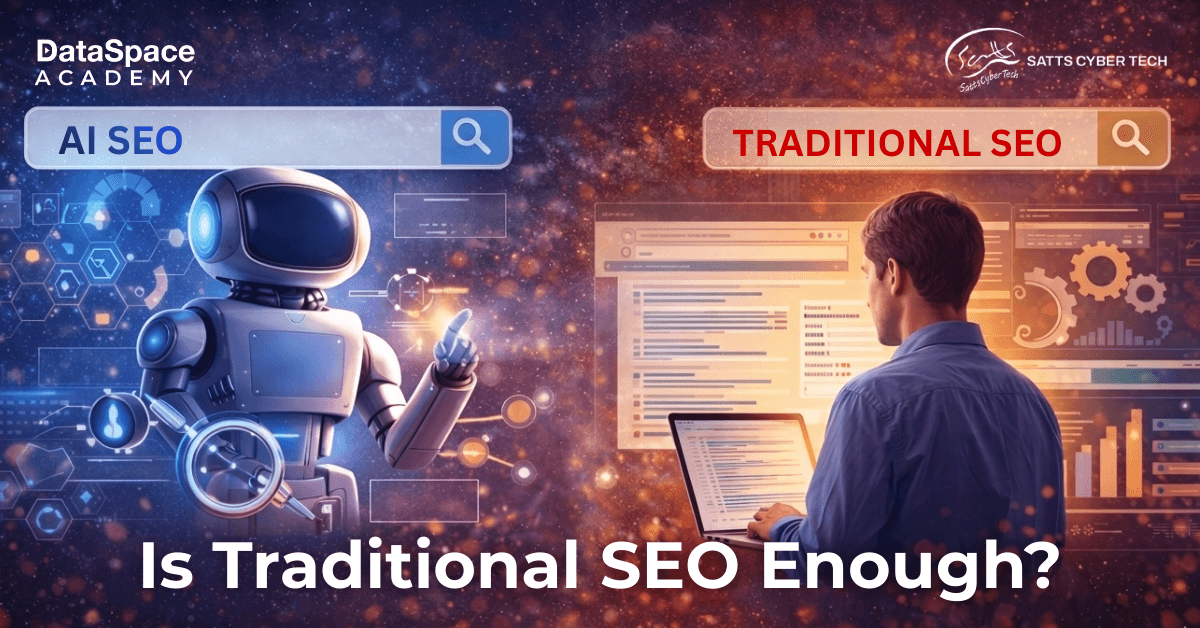
In the early days, SEO primarily focused on ranking web pages through keyword density and technical optimisation. However, modern search engines now rely heavily on artificial intelligence and machine learning to understand user intent and deliver the most relevant results.
This evolution has introduced a new framework known as
AEO Strategy 2026 (Answer Engine Optimization). AEO focuses on directly answering user queries while building strong authority across multiple digital platforms. Instead of just ranking webpages, the goal is to provide accurate answers that search engines and AI-powered systems can easily display.
Companies that adapt to this shift gain faster visibility and better engagement in search results. In this blog, we will explore the downfall of traditional SEO strategies and understand how modern approaches like AEO are reshaping the future of search.
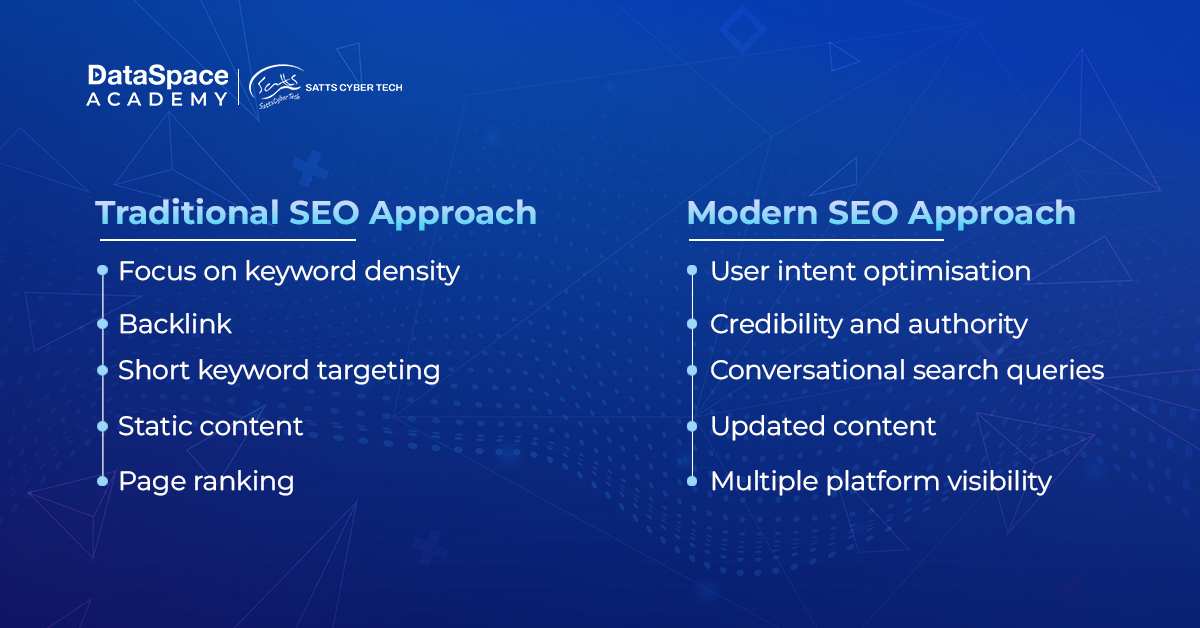
Nowadays, search engines behave as an assistant and enable businesses to optimise content effectively. Platforms like Google analyse content and understand behavioural patterns before ranking it. AI powered systems of Google such as
RankBrain and BERT analyse search queries to understand what users truly want instead of matching exact keywords.
This has led
AI SEO to become a critical component of modern optimisation. Modern search engines now give priority to the following aspects:
Let us take another example. Someone searching for a
digital marketing course in Kolkata with placement expects proper guidance. Modern SEO strategies identify the user's need and create content that clearly answers the query, helping the blog rank better in Google.
There are major changes in search engine technologies that have lowered the effectiveness of traditional strategies. Let us explore them in detail.
Earlier, inserting the right keyword multiple times could push a page higher in search results. Today, search engines evaluate whether the content truly answers the query of users. Suppose there are two blogs, the one that provides more explanation and examples will rank higher in Google.
Voice assistants such as Google Assistant, Alexa and Siri have transformed search behaviour. Instead of typing “best SEO strategy”, users now search conversationally like
“What is the best SEO strategy for businesses in 2026?”. This shift has significantly changed traditional SEO practices.
Recent studies show that nearly
65 percent of Google searches end without a click because users find their answers directly in search results. Knowledge panels and featured snippets now provide instant answers.
Content Authority Matters More Than Volume
Earlier, publishing multiple short blogs could improve rankings. Currently, search engines prefer
comprehensive, well-researched and authoritative content that delivers real value to users.
Answer Engine Optimisation (AEO) is becoming the next phase of digital search. Businesses must optimise their content for answer engines. Key platforms where AEO plays an important role include:
A strong SEO strategy prioritises structured content and provides clear answers to users. For instance, content structured with question-based headings has a higher chance of appearing in featured snippets.
A successful AEO framework includes the following elements:
Adopting these strategies can significantly improve online visibility.
Digital marketing has evolved rapidly, and professionals must upgrade their skill sets to stay competitive. Learning modern optimisation techniques such as AI and content intelligence has become essential. Other important skills include natural language processing and structured data implementation.
Students and professionals who want to build a career in this field often explore programs like a
digital marketing institute in Kolkata to gain exposure to real marketing tools and search algorithms.
A training program that combines
AI tools and analytics helps learners evaluate content performance and optimise it effectively. Institutions like
DataSpace Academy focus on practical industry training aligned with modern digital marketing requirements, helping learners gain real-world exposure in the global business marketplace.
Create Intent-Driven Content
Instead of focusing only on keywords, businesses should answer real user questions.
For example:
“What skills are required for digital marketing careers?”
Blogs that answer such queries clearly perform better in search results.
Optimise Content Structure
Search engines prefer content that is easy to read and logically structured. Businesses should use:
EEAT stands for
Experience, Expertise, Authoritativeness, and Trustworthiness. It is a framework used by Google to analyse the quality and credibility of website content. In modern SEO, EEAT plays a crucial role in determining how trustworthy and valuable a webpage is for users.
E – Experience: Refers to the real-life experience of the content creator. Content created by someone who has direct experience with the topic is considered more valuable.
E – Expertise: Indicates the level of knowledge or skill the author has in a particular subject. High-quality content usually comes from individuals who have strong expertise in the field.
A – Authoritativeness: Measures the reputation of the website or author within the industry. Websites that are widely recognized and cited by other trusted sources are considered authoritative.
T – Trustworthiness: Focuses on the reliability and transparency of the website. Secure websites, accurate information, and clear contact details contribute to higher trust.
EEAT is a framework used to evaluate the content quality of websites and is closely aligned with Google's search algorithm. It helps improve user experience while maintaining the authority and credibility of a website.
Focusing on EEAT can also help enhance factors such as page quality, readability, and overall user engagement. Websites that demonstrate strong experience, expertise, authority, and trust are more likely to perform better in search rankings.
Overall, the EEAT framework provides important signals that help search engines determine whether a website is reliable and worthy of ranking in search results.
Companies are investing heavily in digital marketing professionals who understand modern search technologies because the digital ecosystem is growing rapidly. Industries now require experts who can combine SEO strategy with AI-powered marketing tools and analytics.
This is why many professionals prefer enrolling in a
digital marketing course in Kolkata with placement that provides practical training in SEO, AI tools and performance marketing.
Training institutes such as
DataSpace Academy aim to bridge the gap between theoretical learning and industry expectations. They also focus on a
job guarantee program in digital marketing with AI that prepares students for real industry roles.
Traditional SEO laid the foundation for digital visibility, whereas modern search engines demand a more intelligent approach. Businesses must now prioritise intent-based content and conversational search optimisation to stay competitive in the digital ecosystem.
Adopting a structured
AEO strategy 2026 helps brands adapt to evolving search technologies and ensures their content remains discoverable across AI-powered search platforms.
Professionals who want to master these techniques should explore practical training approaches. Start building future-ready digital marketing skills with
DataSpace Academy today.
Answer Engine Optimization (AEO) helps optimise content so that user queries can be answered directly in search engines.
Modern search engines prioritise user intent and content authority instead of simple keyword optimisation.
AI SEO uses artificial intelligence tools and algorithms to analyse search behaviour and optimise digital content accordingly.
Yes. Digital marketing continues to grow as businesses increasingly depend on online platforms for business growth.
Joining a practical digital marketing program that teaches AI tools and search optimisation can help build industry-ready skills.


 Loading...