Home >blog > how to build a career in data analytics
Can I Choose Data Analytics as a Career?
Published On: 16 Nov 2026
Last Updated: 16 Nov 2026
5 min read

About the Author
DataSpace Academy
DataSpace Academy is a leading Edtech offering career-focused courses like Cyber Security, Data Analytics, Digital Marketing, Data Science, AI with 100% Placement Assistance.
The current industry is highly competitive where Data Analytics Career can suit graduates and professionals who enjoy problem solving and identify patterns. Learn Excel, SQL, Power BI and Python then build practical projects to demonstrate your skills. With structured training and consistent practice, beginners prepare for opportunities across industries.
Introduction
Businesses generate data everyday through customer interaction, online transactions, marketing activities and operations. However, raw data becomes valuable only when someone can understand it and turn it into useful insights. That is where data analysts make a difference. If you enjoy solving problems, identifying patterns and making decisions based on facts. Data Analytics Career could be a strong professional choice. The good news is that you do not always need a computer science degree to enter this field. With the right skills, practical experience, and consistent learning, you can build a pathway into data analytics.
Can I Choose Data Analytics as a Career Without a Technical Background?
If there is a question, can I choose data analytics as a career? The answer is yes. Graduates from commerce, science, management and humanities can explore data analytics. Companies value practical analytical skill, problem solving abilities and the capacity to explain findings clearly. However, you must develop a few essential abilities:
Logical thinking: Understand problems and identify patterns.
Numerical understanding: Work confidently with numbers and basic statistics.
Technical skills: Learn spreadsheets, databases, programming, and visualisation tools.
Communication: Explain findings in simple language.
Curiosity: Ask meaningful questions and investigate results.
Therefore, your academic partner does not have to define your career options. Your willingness to learn and practice matters.
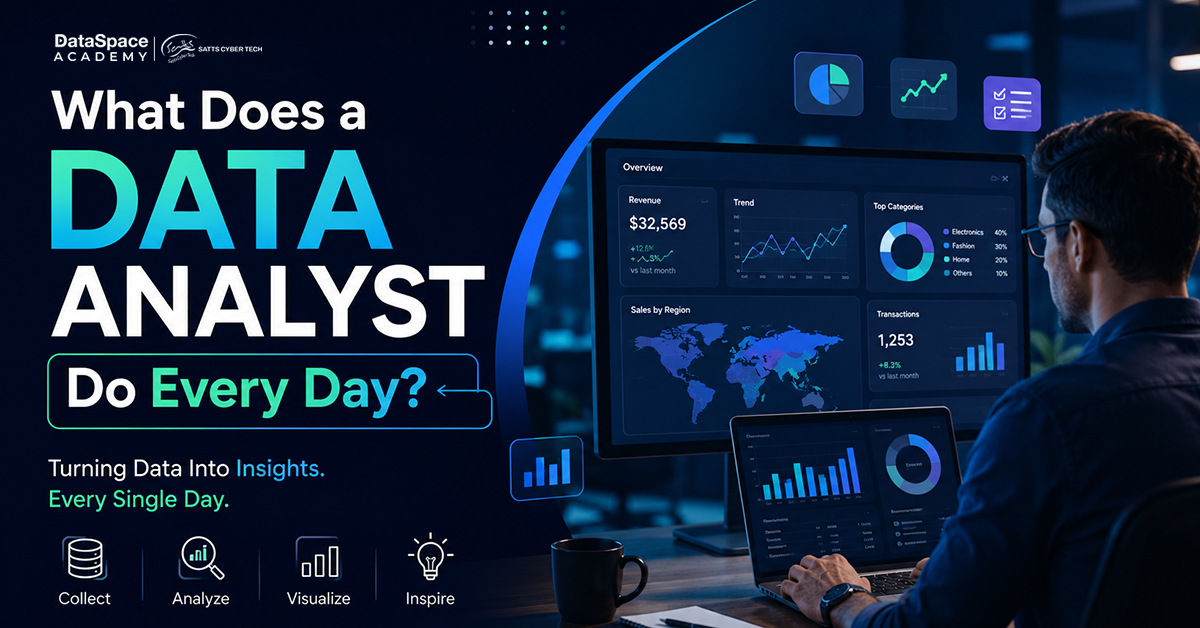
What Does a Data Analyst Do Everyday?
The data analyst everyday life involves more than creating charts and working with spreadsheets. Analysts collaborate with different teams to answer business questions and support decisions. Their regular responsibilities include:
Collecting information from spreadsheets, databases, and business systems.
Cleaning data by correcting errors, removing duplicates, and handling missing values.
Using SQL to retrieve and organise relevant information.
Analysing trends, customer behaviour, sales performance and business operations.
Creating dashboards and reports using Power BI or Tableau.
Presenting findings and recommendations to stakeholders.
For example, a retail company may notice a sudden drop in monthly sales. A data analyst can compare sales across products, location and customer group to identify possible reasons.
Which Skills Should You Learn to Enter Data Analytics?
Start with the fundamentals and gradually move towards advanced tools. You do not need to learn everything at once. Focus on these core skills:
Advanced Excel: Organise datasets, use formulas, create PivotTables, and prepare reports.
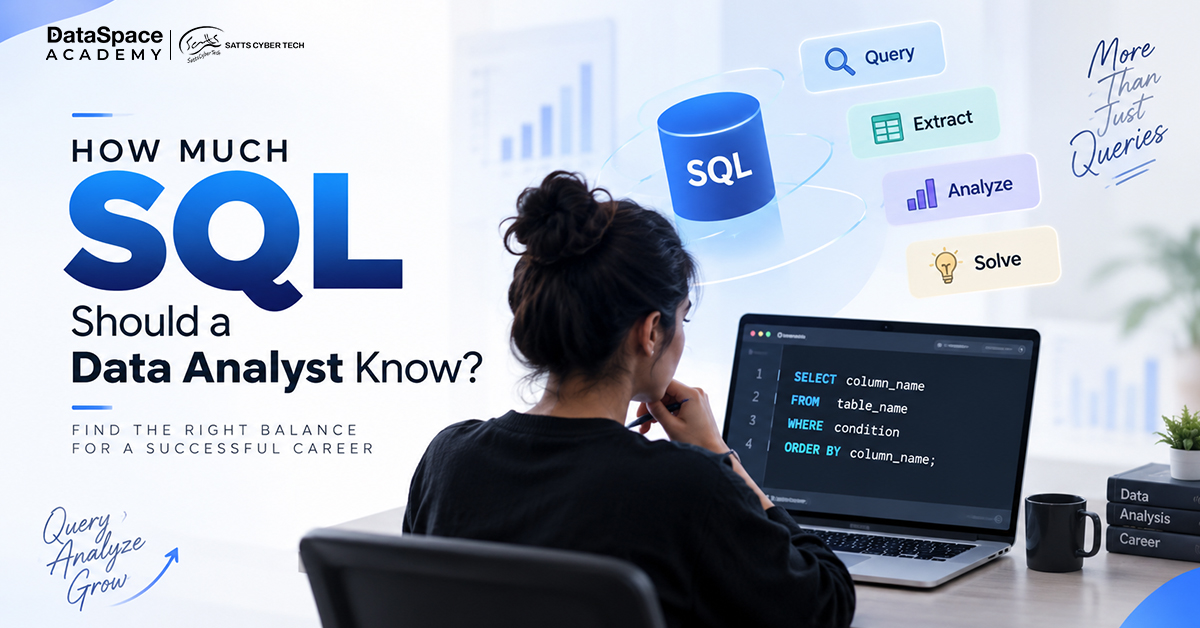
SQL: Retrieve, filter, join, and analyse information stored in databases.
Statistics: Understand averages, distributions, correlation, and basic statistical concepts.
Power BI: Build interactive dashboards and communicate insights visually.
Python: Use libraries such as Pandas and NumPy to clean and analyse datasets.
Business understanding: Connect analytical findings with practical business requirements.
Moreover, practise each skill through assignments instead of relying only on theoretical lessons.
How to Build a Data Analytics Portfolio for Beginners?
A strong data analytics portfoliofor beginners helpsdemonstrateyour abilitiesthrough actual work. Instead of listing tools on your resume, show how you use them to solve problems. Start with these project ideas:
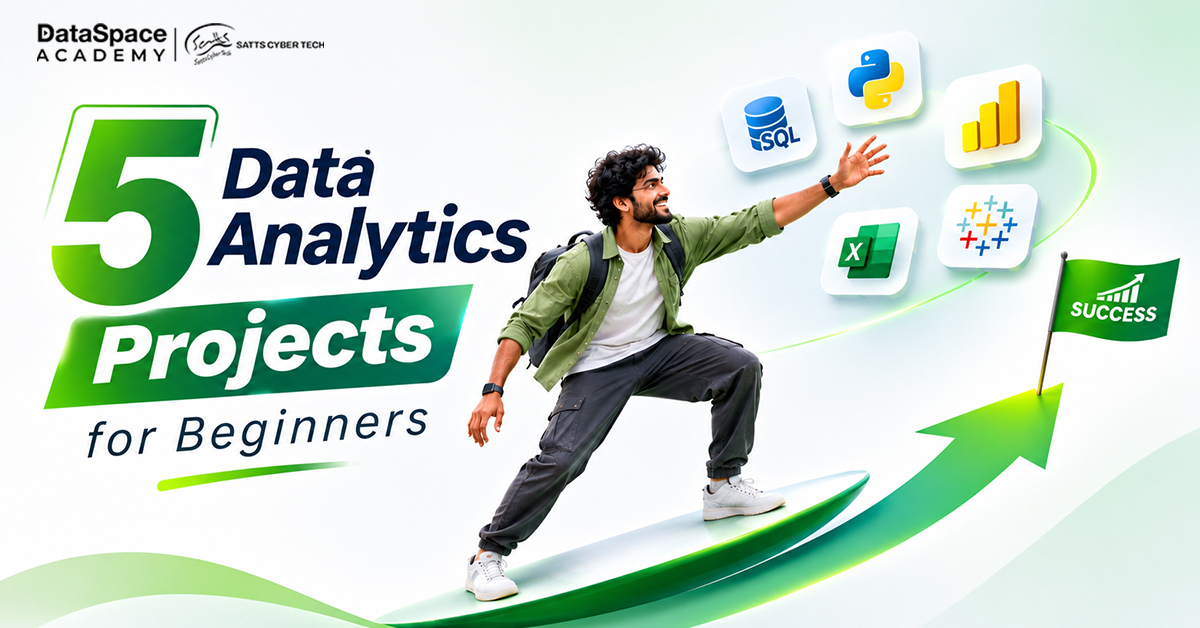
Sales analysis: Identify top-selling products and monthly revenue trends.
Customer behaviour analysis: Study purchasing patterns and customer preferences.
Employee attrition analysis: Examine factors that influence employee turnover.
Expense analysis: Track spending patterns and prepare a financial dashboard.
How Can You Prepare For a Data Analytics Career?
Choose a structured learning path that combines technical knowledge with practical experience. If you are searching for a Data Analytics Course in Kolkata, compare the curriculum, project work, trainer experience, learning format, and career support before enrolling. If you prefer remote learning, consider Data Analytics Training Online that provides guided sessions, assignments, project feedback and opportunities to practice with a data set. Here, DataSpace Academy supports learners through structured training, hands-on assignment and career preparation.
Conclusion
Data Analytics Career can suit people who enjoy working with information, solving business problems, and learning new tools. Although the field requires consistent practice, you can start with basic Excel and gradually build expertise in SQL, Power BI, Python and statistics. Start small, complete practical projects, and keep improving your analytical thinking. With the right learning approach, you can turn your interest in data into a meaningful professional direction. Ready to take your first step? Explore the Data Analytics with AI programme at DataSpace Academy and start building practical skills for your career.
FAQs
Can I choose data analytics as a career after graduation?
Yes, graduates from different academic backgrounds can pursue data analytics.
Do I need coding knowledge to become a data analyst?
No, you can begin with Excel and learn SQL and Python gradually.
Which tools should beginners learn first?
Start with Excel, SQL and Power BI before progressing to Python.
How can beginners build a data analytics portfolio?
Complete practical projects and document your process, findings, and recommendations.
Is data analytics a good career option for freshers?
Yes, freshers can explore entry-level roles by developing relevant skills and project experience.